Dreams have captivated thinkers since ancient times, but their mystery is now closer than ever to being resolved, thanks to new technology that allows scientists to observe the sleeping brain at work.
When are we too busy? For some people, it means eating a very quick lunch. For others, it means missing lunch completely or never taking a day off. There are also people who work every evening and weekend. For them, feeling stressed is a normal part of life. Managers and business leaders are usually very busy. Neil Plumridge, a manager at a consulting company, says he works between 45 and 80 hours a week. His average is about 60 hours.Plumridge knows he is working too much when three things happen. First, he sleeps for less than six hours for three nights. Second, he has to change the time of his meetings. Third, he misses family events, like birthdays. "That is when I know I have a problem," he says. He explains that his stress happens because he expects too much from himself. He often promises to finish work for two different clients on the same day, even though it is impossible.Taking on too much work is a common problem. A new study shows that people always think they will have more free time in the future. Researchers Gal Zauberman and John Lynch say this is a mistake. "People will be just as busy next month as they are today," they explain. Because we think we will have more time later, we agree to do things in the future that we would say "no" to today.Stress feels different for everyone, but there are clear signs. Bad sleep and poor health are the most common signs. Statistics show that stress is a huge problem in the workplace. When workers take time off because of stress, they usually stay home for about 16 weeks. Stress is also very expensive for companies. In Australia, reports showed that stress-related problems cost insurance companies a lot of money.Experts say the best way to stop stress is not just relaxing or playing sports. You need to change how you work. Plumridge says he tries to change his plans. He might ask more people to help him, or he might ask his clients for more time. He also talks to his co-workers for advice.Stress doesn't only happen in big companies. Vanessa Stoykov has her own small advertising business. Her company grew very quickly. At the same time, she had two babies. She says she learned how to take care of her children, type on her computer, and talk on the phone at the same time. Even though she is very busy and stressed, she loves her work.Jan Elsner is a psychologist who helps business leaders. She says many successful people actually work very well when they are busy. She believes that positive feelings at work—like enjoying a challenge—help people become stronger against stress. Elsner also says that many business people use meditation to relax. Science shows that meditation can change the brain and help the body fight stress.Finally, some experts think stress is not just a personal problem. Tony LaMontagne, a researcher, says that the type of job you have is very important. His research shows that having control over your work is the best way to stop stress. The best jobs are difficult but give you the freedom to make your own choices. The worst jobs are difficult but give you no freedom. People with hard jobs and no freedom have a much higher risk of depression and heart attacks.
A Under the flat surface of Australia lie hidden mountains and valleys. These act as ancient traps and channels for the deadly salt that is slowly destroying the Australian landscape. The fight against salt is now calling for new weapons. Advanced technologies, originally used by geologists to search for gold and minerals, are now being used to locate underground salt and predict where it will move.B Dr. Neil Phillips warns that unless this underground process is clearly understood, the hard work of planting trees on the surface might be useless. Salt can still bypass surface defenses and rise to the top by following ancient underground rivers. Airborne electromagnetics have been used for a decade to detect hidden salt, but the technology has greatly improved in the last two years. Like radar in a battle, it can help scientists turn the tide by pinpointing and predicting the movements of the enemy.C Angus Howell, a farmer in Southeast Australia, first saw salt damage on his land in 1948. Over the following decades, the salty patches spread until they ruined almost 100 hectares. In the late 1970s, Howell and other farmers took action and started a 'Landcare' group to save Australia's farmland. But despite the mounting efforts of scientists and the government, this 'white death' kept spreading. Small victories were often ruined by larger defeats and new outbreaks.D "We don't have the technical, social, or economic solutions yet," Howell says. "How can you change the way land is used when farmers still need to earn a living?" There is no perfect solution yet. The main problem is that salt can appear in unexpected places, ruining plans to stop it. Only now are scientists starting to discover its secret underground passages.E This knowledge is urgently needed. Salt has already damaged six million hectares of once-productive farming land. Experts predict that by 2050, it will completely destroy 17 million hectares, and the Murray River will become too salty to meet drinking water limits. Defeating this problem might take centuries, not just decades.F Scientists use electromagnetic surveys to measure soil conductivity, which shows where salt is located under the surface. Meanwhile, magnetic surveys measure small differences in the Earth's magnetic field. This allows scientists to map ancient, buried landscapes like old rivers and basins. Understanding these features helps reveal where groundwater is stored and which way it moves. This is essential for predicting where salt will appear next.G Radiometric analysis detects natural radiation from rocks and soils, helping scientists map different landforms. This information helps them understand how salt moves through the earth and decide where to plant specific crops to fight the problem. Using data from the Murray River, scientists found ancient drainage channels buried deep underground. Interestingly, these buried channels can carry salt in entirely different directions than the water flowing on the surface.H Professor Phillips says the biggest breakthrough is combining different techniques, such as magnetics, electromagnetics, and ground mapping. Individually, these tools only gave small clues. Together, they provide a clear, comprehensive picture of the underground landscape. Advanced airborne scanners allow scientists to look at virtual "slices" of the earth at various depths to see exactly where salt is stored. This creates a four-dimensional picture over time, showing how salt moves. With this technology, scientists can locate salt, understand what makes it move, and predict where it will go. This gives them time to test different ways to stop the salt before it ruins more land.
IMAGINE regularly waking up exhausted, not because you didn't sleep, but because you seemingly spent the entire night immersed in incessant dreams, writes Emma Young.
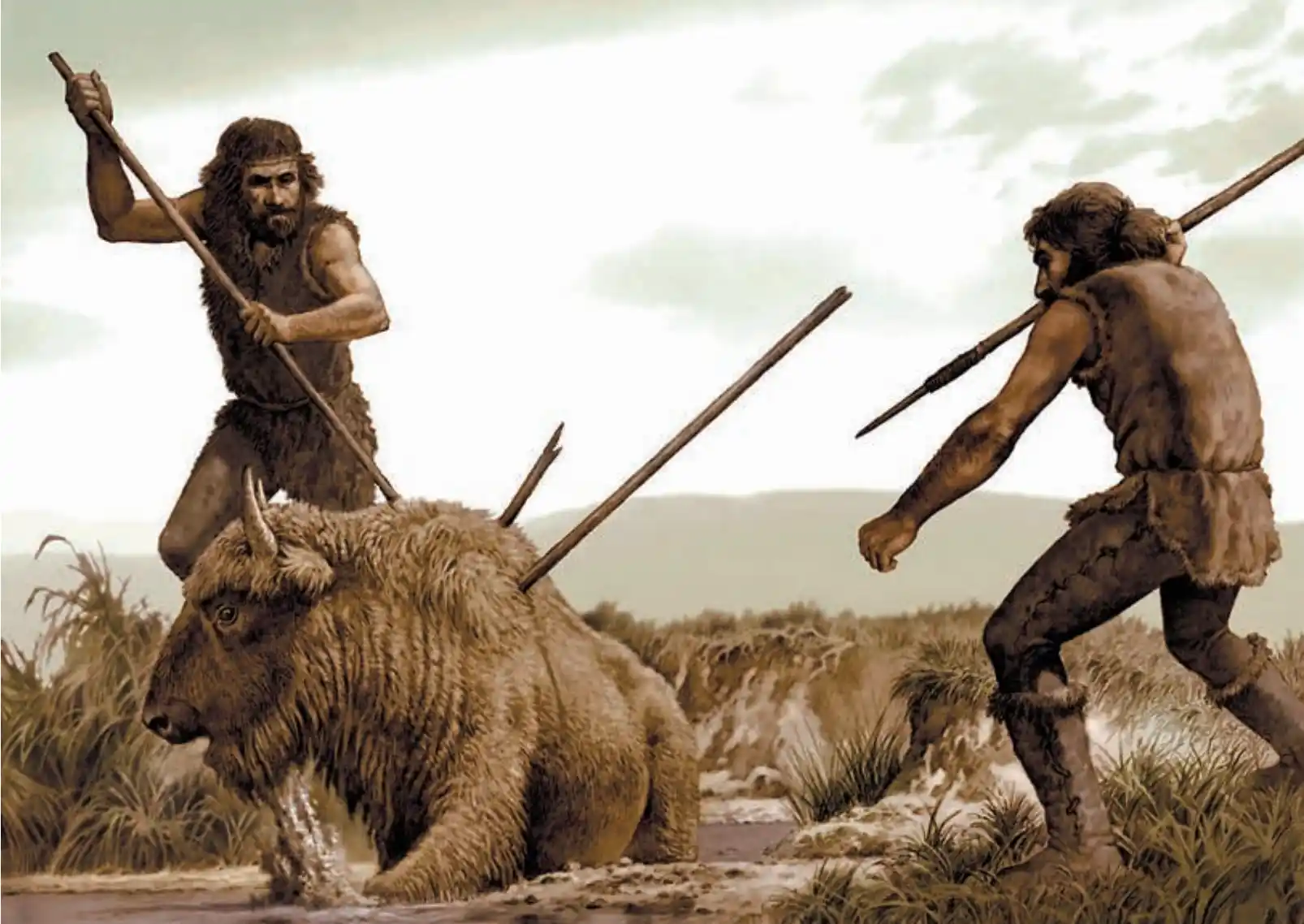
Discover how a desperate shortage of ancient elephants and the sudden need to hunt tiny, elusive prey may have forced human brains to rapidly evolve and expand.